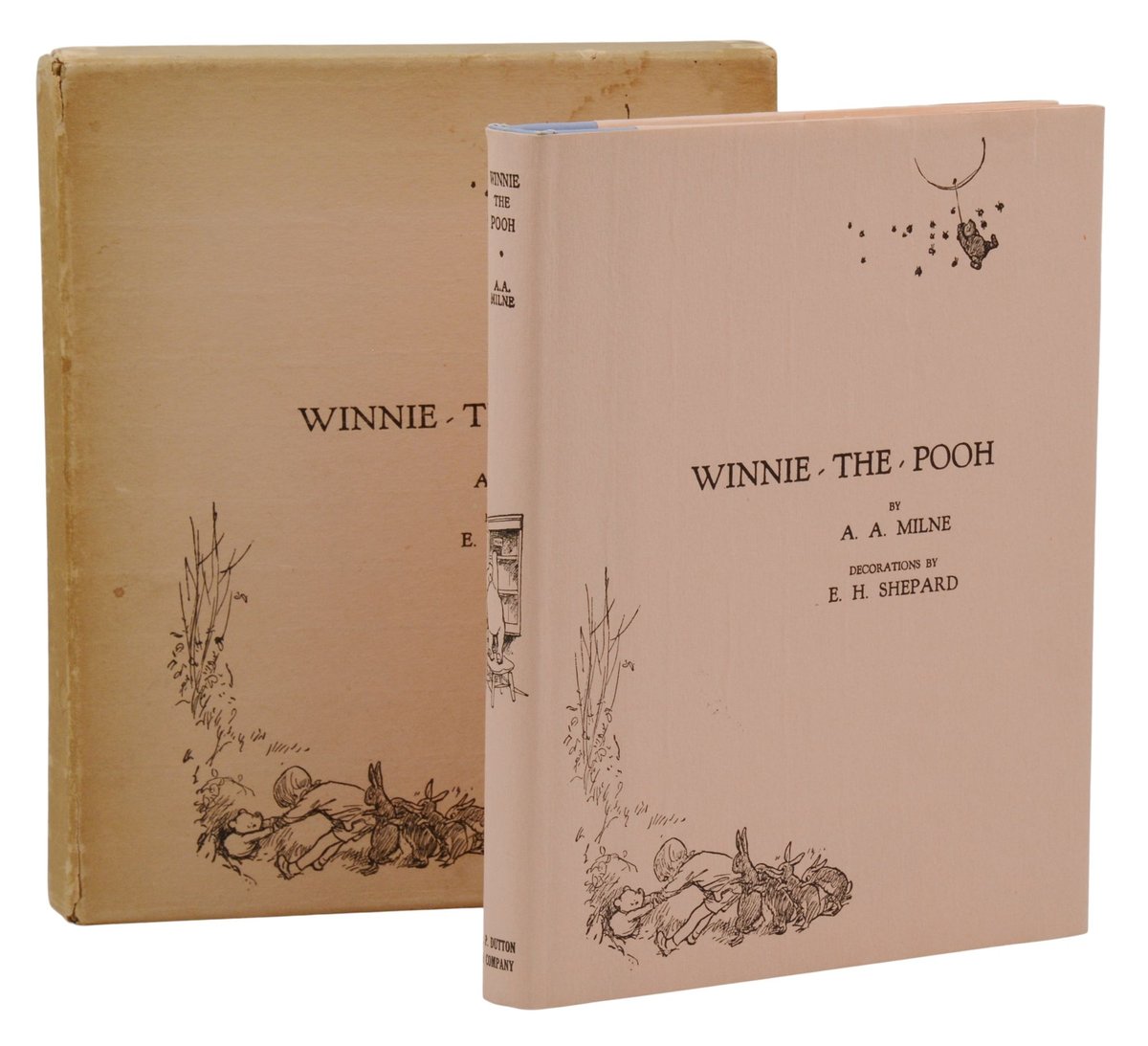
Step into the Hundred Acre Wood, and you're not just entering a whimsical landscape of make-believe; you're stepping into a meticulously crafted world born from the pens of A.A. Milne and E.H. Shepard. The Original Winnie the Pooh Books & Illustrations are more than just beloved children's tales; they are a testament to a unique artistic collaboration that gave form and spirit to characters now etched into global consciousness. From Pooh’s thoughtful hums to Eeyore’s endearing gloom, these stories and their iconic drawings remain as potent and comforting today as they were a century ago.
Before we dive deep into the gentle magic, here's a quick overview of what makes these original works so special.
At a Glance: The Enduring Charm of Original Pooh
- A Unique Partnership: The literary genius of A.A. Milne met the unparalleled artistry of E.H. Shepard, forging a world that transcends simple storytelling.
- Four Foundational Books: The core quartet – When We Were Very Young, Winnie-the-Pooh, Now We Are Six, and The House at Pooh Corner – introduced us to Christopher Robin and his beloved toy companions.
- Shepard's Legacy: E.H. Shepard’s distinctive line drawings didn't just illustrate the text; they defined the visual identity of Pooh, Piglet, Tigger, and the entire Hundred Acre Wood.
- Beyond the Bear: Shepard was a distinguished artist well before Pooh, with a celebrated career spanning Punch Magazine, editions of Dickens, and The Wind in the Willows.
- Inspired by Reality: While Milne's son Christopher Robin and his teddy bear inspired the character of Pooh, Shepard's own son's toy bear, Growler, influenced the visual depiction.
- Preserving History: Original artwork, manuscripts, and even Christopher Robin’s original stuffed toys are carefully preserved, allowing future generations to connect with this treasured heritage.
The Genesis of a Timeless Friendship: Where Words Met Whimsical Lines
The story of Winnie the Pooh begins, as many great stories do, with a child. A.A. Milne, a respected playwright and author, found a new wellspring of inspiration in his son, Christopher Robin, and his collection of stuffed animals. What began as bedtime stories soon evolved into published poetry and prose, captivating a world emerging from the shadow of World War I. But Milne’s enchanting narratives needed a visual counterpart, someone who could translate the gentle humor and profound insights of the Hundred Acre Wood into equally memorable imagery. This is where Ernest Howard Shepard entered the picture.
Shepard, born in London in 1879, was an artist of considerable talent, encouraged early on by his mother. His academic prowess earned him a scholarship to the Royal Academy at just 18. Before Pooh, Shepard had already established a commendable career, illustrating editions of classics like Dickens and Aesop’s Fables. He was a long-standing contributor to Punch Magazine from 1907, becoming a permanent employee for over three decades, where his keen eye for detail and expressive line work were highly valued. It's also notable that during WWI, Shepard served with distinction in the Royal Artillery, earning a Military Cross for bravery in France and Belgium, all while continuing to sketch for Punch. This rich background speaks to the depth of experience and character he brought to his illustrative work.
In the 1920s, Milne commissioned Shepard to bring his children's worlds to life. While the personal relationship between Milne and Shepard wasn't particularly close—they were professional collaborators more than intimate friends—their creative synergy was undeniable. Milne's son's teddy bear was the inspiration for the character of Winnie the Pooh, but it was Shepard’s son’s toy bear, Growler, that influenced the distinctive visual representation that we all recognize today. This subtle distinction highlights the artistic interpretation that Shepard brought to the literary vision.
Their collaboration resulted in four iconic books that form the bedrock of the Pooh canon:
- When We Were Very Young (1924)
- Winnie-the-Pooh (1926)
- Now We Are Six (1927)
- The House at Pooh Corner (1928)
These books introduced us to the unforgettable inhabitants of the Hundred Acre Wood: Christopher Robin, the lovable Winnie the Pooh, the bouncing Tigger, the perpetually gloomy Eeyore, the timid Piglet, the wise Owl, the practical Rabbit, and the nurturing Kanga (with Roo). Together, these works cemented Milne and Shepard's association in literary history, creating a universe that has charmed generations.
E.H. Shepard: The Master Illustrator Behind the Magic
Shepard's contribution to the Pooh phenomenon cannot be overstated. His illustrations don't merely accompany Milne’s text; they are an integral part of the storytelling, capturing the essence of each character and scene with incredible precision and warmth. His style, characterized by delicate line drawings, is masterfully expressive, conveying emotion and movement with minimal strokes. If you're keen to explore more about [the multifaceted career of E.H. Shepard], you'll find his artistic range extended far beyond the Hundred Acre Wood. Indeed, his line drawings for Kenneth Grahame’s The Wind in the Willows (1931) are equally celebrated, demonstrating his versatility and unique ability to interpret classic literature.
Shepard's working practice involved careful preparatory sketches, often using pencil rubbings for transfer, as seen in his early ideas for The Pooh Cook Book (written by Katie Stewart and published in 1971, later The Pooh Corner Cook Book). These initial sketches, heavy with pencil markings, offer a fascinating glimpse into his creative process, sometimes even revealing small details like the absence of the now-famous "Hunny" spelling in early drafts.
However, despite the immense success and adoration for his Pooh illustrations, Shepard himself held mixed feelings about the series later in life. The fame of Winnie the Pooh was so pervasive that it often overshadowed his other significant artistic achievements, something he occasionally lamented. Yet, it is precisely this body of work that has ensured his name will forever be synonymous with the magic of childhood, preserving a legacy that continues to resonate.
Unpacking the Iconic Pooh Books: A Guide to the Original Quartet
Each of the four original books offers a distinct flavor of the Hundred Acre Wood, expanding the world and deepening our connection to its inhabitants.
1. When We Were Very Young (1924)
This collection of poetry served as the initial introduction to Christopher Robin and, significantly, to a bear named Pooh. While primarily a book of verse, it lays the groundwork for the more narrative adventures to come. Shepard's illustrations for these poems perfectly capture the innocence and imaginative spirit of childhood.
2. Winnie-the-Pooh (1926)
The first full-length collection of stories, this book truly introduces the world to Winnie-the-Pooh, who "lived in a forest all by himself under the name of Sanders" (page 3, accompanying his introduction). It's where many beloved characters like Eeyore, Piglet, and Kanga make their debut, and where classic tales like "Hunting a Woozle" unfold.
3. Now We Are Six (1927)
Another volume of poetry, this book reflects Christopher Robin's slightly older perspective, with poems that are a touch more reflective. Shepard's illustrations here, such as "The Bathmat" for the poem ‘The Friend’ (an illustration of Christopher Robin with Winnie-the-Pooh that was offered at auction in May 1998), continue to perfectly complement Milne's verses.
4. The House at Pooh Corner (1928)
This final book in the quartet brings Tigger bouncing into the Hundred Acre Wood and features some of the most memorable stories, including the invention of Poohsticks and the poignant farewell between Christopher Robin and Pooh. It’s a bittersweet conclusion to the original saga, cementing the characters' places in our hearts.
Illustrations That Defined Childhood: Iconic Scenes and Their Stories
Shepard’s illustrations are more than just pictures; they are visual shorthand for entire stories, deeply embedded in our collective memory. Let’s explore some of the most iconic images and their contexts:
- "Winnie-the-Pooh – bump, bump, bump – going up the stairs behind him.”
This full-page illustration (page 159 of Winnie-the-Pooh) from the final chapter of the book – Christopher Robin's Pooh party – is arguably one of the most iconic images. It perfectly encapsulates the child-like joy and the tangible presence of Pooh in Christopher Robin's world. - Hunting a Woozle Sequence
From Winnie-the-Pooh, this sequence perfectly illustrates the escalating confusion and circular logic of Pooh and Piglet. - “Tracks,” said Piglet. “Paw-marks…” (Page 34, first drawing)
- “With these few words he went on tracking...” (Page 35, full-page, second drawing)
- “What?” said Piglet, with a jump.” (Page 37, third drawing)
- “Do You See Piglet? Look At Their Tracks!” (Page 38, fourth and final drawing, reproduced at a different angle). Each drawing builds on the previous one, showing their growing alarm and the increasing number of "Woozle" tracks.
- Piglet Meets a Heffalump
Another classic from Winnie-the-Pooh, these drawings are central to Piglet’s courageous (and slightly misguided) attempt to catch a Heffalump. - “…there was a little left at the very bottom of the jar, and he pushed his head right in…” (Page 64). This drawing, depicting Piglet stuck in the honey jar, was a gift from Shepard's daughter in 1974.
- “…Christopher Robin finished the mouthful he was eating and said carelessly: “I saw a Heffalump to-day, Piglet.” (Page 55). This setup image shows the casual beginning of Piglet's grand adventure.
- Poohsticks
From The House at Pooh Corner, this illustration captures the very moment of invention for one of the most famous games in children's literature: “I’m not throwing it, I’m dropping it Eeyore.” (Page 98), depicting Pooh inventing Poohsticks while Eeyore, ever the pessimist, floats in the river below. - Owl's New Home
In The House at Pooh Corner, the image of Eeyore suggesting Piglet’s house as a new home for Owl is both humorous and poignant: “Just the house for owl. Don’t you think so, little Piglet?” (Page 159). This scene highlights Eeyore's characteristic bluntness and Piglet's eventual sacrifice. - Pooh Party
A later version of the illustration on page 149 from the final chapter of Winnie-the-Pooh shows Piglet getting ready for the party, with the caption: “Lucky we know the forest so well or we might get lost.” It beautifully conveys the anticipation and shared joy among friends. - Search for Small
From The House at Pooh Corner, this illustration captures a moment of gentle fear and discovery: “Pooh!” he cried. “There’s something climbing up your back.” (Pages 52 and 47). Shepard expertly depicts the surprise and wonder on Pooh’s face. - Piglet Does a Very Grand Thing
Also from The House at Pooh Corner, this powerful image shows the resilience of friendship: “..then they went on to Kanga’s house, holding on to each other..” (Page 129). It depicts Pooh and Piglet walking against the wind, a metaphor for facing challenges together. - Eeyore Loses a Tail
A classic from Winnie-the-Pooh, this illustration brings a smile as Eeyore's tail is reattached: “…and when Christopher Robin had nailed it on in its right place again, Eeyore frisked about the forest…” (Page 52). It perfectly captures the donkey’s rare moment of delight. - Winnie-the-Pooh Introduction
The very first illustration of Pooh in Winnie-the-Pooh, on page 3, sets the stage for his adventures, establishing his dwelling "under the name of Sanders." - Christmas Card
A truly unique piece, this illustration features Eeyore with holly, Pooh with honey, and Piglet with a Christmas cracker. It is the only known Christmas card by E.H. Shepard to feature A.A. Milne's characters. - Sketch-map (endpapers of Winnie-the-Pooh)
A beloved element of the books, the preparatory drawing for this celebrated map reveals Shepard’s detailed thought process. Revisions included changing 'Eeyores Pasture Land' to 'Eeyores Gloomy Place' and 'Floods Might Happen Here' to 'Floody Place'. It also contained a handwritten question, "What sort of House is Kangas?". The caption for authorship humorously evolved from ‘Drawn by Me helped by Mr Shepard’ to ‘Drawn by Me and Mr Shepard helped’, eventually printed as ‘Drawn by Me and Mr Shepard helpd’. This map serves as an early example of collaborative world-building and a meta-narrative element in the books.
Beyond the Pages: The Enduring Legacy and Its Keepers
The magic of the Hundred Acre Wood extends far beyond the printed page. If you're curious about [a deeper look into A.A. Milne's life], you'll find that his literary output was incredibly varied, yet it's Pooh that remains his most enduring legacy. The very toys that inspired Milne's stories, [Christopher Robin’s original toy collection], including the actual teddy bear, are carefully preserved and housed in the New York Public Library, serving as a tangible link to the genesis of these tales. This offers a unique opportunity for enthusiasts and scholars alike to connect directly with the characters' real-world origins.
The ongoing preservation of Shepard's original artwork is a testament to its cultural significance. James Campbell, overseer of the E.H. Shepard estate, has dedicated himself to this task, even writing the first dual biography of A.A. Milne and E.H. Shepard to mark the centenary of Winnie-the-Pooh. This new book, along with Campbell's reissued title, The Art of Winnie-the-Pooh, features never-before-seen archival material, offering fresh insights into the collaboration and the artists' lives. These efforts ensure that the intricate details and emotional depth of Shepard's drawings continue to be appreciated and studied for generations to come.
Collecting the Hundred Acre Wood: What to Look For in Original Editions
For those who wish to hold a piece of this literary history, understanding what constitutes an "original" or "first" edition is key. While [collecting Winnie the Pooh first editions] can be a complex endeavor, generally, a true first edition means the very first printing of a book by its original publisher. The values of these editions vary greatly depending on condition, rarity, and whether they are signed. The quality of Shepard's illustrations in early printings often appears sharper and more defined, reflecting the original pressings.
Beyond books, Shepard's actual drawings and preparatory sketches are highly coveted by collectors and institutions. These original artworks offer unparalleled insight into his artistic process and the evolution of the iconic images. The delicate pencil work, the slight revisions, and the sheer artistry present in these pieces reveal a profound dedication to his craft, far beyond mere commercial illustration.
Understanding Shepard's Artistry: A Deeper Look at His Craft
Shepard's artistry is characterized by an almost effortless simplicity that belies immense skill. His line drawings are economical yet incredibly evocative, capturing the personalities of each character with just a few strokes. He mastered the art of conveying emotion—Eeyore's slump, Piglet's wide-eyed timidity, Pooh's thoughtful posture, Tigger's boundless energy—through subtle shifts in posture, facial expression, and even the direction of a line.
He understood how to use negative space to his advantage, allowing the white of the page to play a crucial role in framing his subjects and focusing the viewer's eye. This minimalist approach gives the illustrations a timeless quality, preventing them from feeling dated. Furthermore, Shepard had an extraordinary ability to bring the Hundred Acre Wood to life, imbuing its trees, rivers, and paths with a distinct personality that feels as much a character as Pooh himself. This nuanced artistry is a cornerstone of the books' enduring appeal, inviting readers to linger on each page and discover new details with every revisit.
Your Journey into the Original Hundred Acre Wood
The Original Winnie the Pooh Books & Illustrations represent a zenith in children's literature, a harmonious blend of narrative charm and visual genius. They offer a sanctuary of innocence, friendship, and gentle wisdom that continues to resonate across cultures and generations.
Whether you're revisiting these stories from your own childhood, sharing them with a new generation, or simply appreciating the profound artistry of E.H. Shepard, there's always something new to discover in the Hundred Acre Wood. Dive back into the original texts, pay close attention to the delicate lines of Shepard’s drawings, and allow yourself to be transported. For those interested in exploring [All about vintage Winnie the Pooh], there's a rich history awaiting your discovery. The magic, you'll find, is as vivid and heartwarming as ever.
Untuk pemahaman lebih lengkap, baca panduan utama kami: All about vintage Winnie the Pooh